

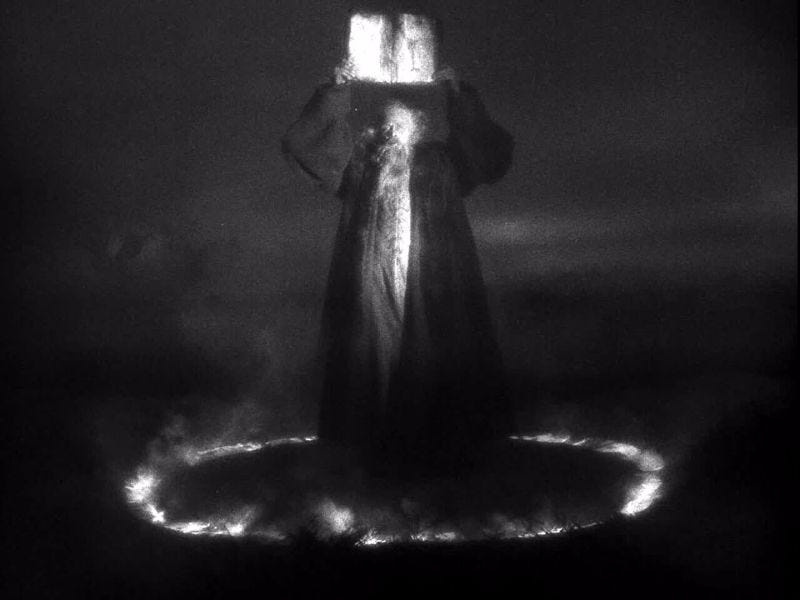
“What is more general is a rejection of Christian tradition in the name of a supposedly broader and more efficient method from achieving an individual and, by the same stroke, a collective renovation. Even when these ideas are naively or even ludicrously expressed, there is always the tacit conviction that a way out of the chaos and meaninglessness of modern life and that this way out implies an initiation into, and consequentially the revelation of, old and venerable secrets. It is primarily the attraction of a personal initiation that explains the craze for the occult. As is well known, Christianity rejected the mystery-religion type of secret initiation. The Christian ‘mystery’ was open to all; it was ‘proclaimed upon the housetops,' and Gnostics were persecuted because of their secret rituals of initiations. In the contemporary occult explosion, the ‘initiation’ – however the participant may understand this term – has a capital function: it confers a new status on the adept; he feels that he is somehow ‘elected,’ singled out from the anonymous and lonely crowd. Moreover, in most of the occult circles, initiation also has a superpersonal function, for every new adept is supposed to contribute to the renovation of the world.”
- Mircea Eliade “The Occult and the Modern World” (1974)
“To bear a God within one’s self signifies just as much as to be God one’s self…There are even plainer traces, to be sure, in the ‘becoming-one-with-God’ in those mysteries closely related to the Christian, where the mystic himself is lifted up to the divine adoration through initiatory rites…These representations of ‘becoming-one-with-God’ are very ancient. The old belief removed the becoming-one-with-God until the time after death; the mysteries, however, suggest this as taking place already in this world.”
- Carl Jung “The Psychology of the Unconscious” (1916)[1]
“Before religion had reached the stage of proclaiming that God must be put into the absolute and ideal, that is to say, beyond this world, one worship alone was reasonable and scientific: that was worship of the sun.”
- Carl Jung “The Psychology of the Unconscious” (1916)[2]
“The ethical problem of sexual freedom really is enormous and worth the sweat of all noble souls. But 2000 years of Christianity can only be replaced by something equivalent…[an] irresistible mass movement…I imagine a far finer and more comprehensive task for [psychoanalysis] than alliance with an ethical fraternity. I think we must give it time to infiltrate into people from many centers, to revivify among intellectuals a feeling for symbol and myth, ever so gently to transform Christ back into the soothsaying god of the vine, which he was, and in this way absorb those ecstatic instinctual forces of Christianity for the one purpose of making the cult and the sacred myth what they once were – a drunken feast of joy where man regained the ethos and holiness of an animal.
That was the beauty and purpose of classical religion, and from which God knows what temporary biological needs has turned into a Misery Institute. Yet what infinite rapture and wantonness lie formant in our religion, waiting to be led back to their true destination! A genuine and proper ethical development cannot abandon Christianity but must grow up within it, must bring to fruition its hymn of love, the agony and ecstasy over the dying and resurgent god, the mystic power of the wine, the awesome anthropophagy[3] of the Last Supper – only this ethical development can serve the vital forces of religion.”
- Carl Jung “Freud/Jung Letters”[4] (Jung letter to Freud written early 1910)

This is the seventh instalment to the series “The Shaping of a World Religion: From Jesuits, Freemasons, & Anthropologists to MK Ultra and the Counter-Culture Movement.” For the previous instalments see Part I, Part II, Part III and Part IV.

Part V and Part VI are included in the section to “The Shaping of a World Religion: Carl Jung and the Land of the Dead”. This paper is part of this series.

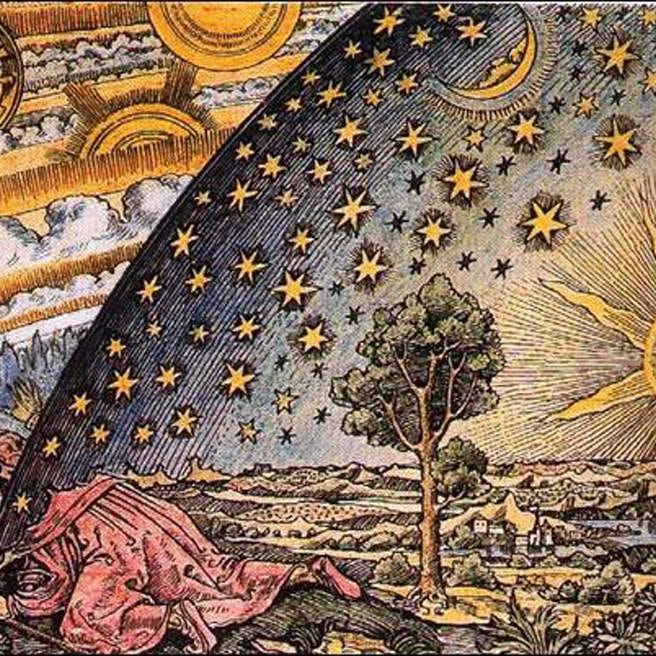
The Ghost Dance religion (the focus of Part I to IV of this series) was summarised in the introduction to Part V. It is important for the reader to be aware that this was a millennial religion that promised the Native Americans a “New Dawn” prophecy. This millennial religion was given to them by a “white man” as the legend goes and throughout its spread in the 1700s and 1800s, showed evidence of manipulation by the Jesuits, Scottish Rite and the Mormon Freemasonic headquarters at Salt Lake City.
William Sargant, pioneer of Tavistock & MK Ultra mind control techniques in his “Battle for the Mind” (1957), who will be discussed in detail later in this series, was especially focused on methods of sudden “religious” conversions. A subject that the Jesuits clearly excelled at and can be observed with phenomenal success in the case of the Ghost Dance. It appears the Ghost Dance was to become a prototype for what would later shape the counter-culture movement which, whether one likes to admit it or not, came hand-in-hand with MK Ultra de-patterning.[5]
In fact, Carl Jung would play a prominent role in developing this “art” of psychological de-patterning and dissociation techniques that would play a major role in shaping MK Ultra (this will be discussed further in this paper and the instalments that will follow). As this paper will make the point, this was not some unhappy outcome, where the “good” works of Jung were used for “bad” intentions, but rather that this was largely recognised by Jung himself, who spoke frequently with Allen Dulles[6] - the father of MK Ultra.
It is here that we will resume our story…
***
As Jung’s letter to Freud, cited above, makes abundantly clear, Jung was very much thinking about how to shape a “mass movement”. Not just a “mass movement” in the “sciences” or the “field of psychology” but a “religious mass movement.” As will soon be demonstrated, in Jung’s mind, this new religion of modernity would be based upon his unique approach to psychoanalysis. These thoughts were first revealed out loud at the beginning of the year 1910 in Jung’s correspondences with Freud.
In August 1910 Jung again discusses the theme of a millenarian religion of psychoanalysis. He writes to Freud that the opponents to psychoanalysis:
“are saying some very remarkable things which ought to open our eyes in several ways…All these mutterings about sectarianism, mysticism, arcane jargon, initiation, etc., mean something…that has all the trappings of a religion.”[7]
Thus, Jung is acknowledging here that the opponents of the psychoanalytic movement are critical due to its too many similarities with that of a religious movement. Jung does not refute this charge, but is rather saying that the psychoanalytical movement must recognise this fact for themselves and “open our eyes.” In this same letter to Freud in response to this criticism of being a “religion,” Jung suggests a counter-offensive strategy, that psychoanalysis should seek to create an elite, to protect itself against its critics, and through this elite’s powerful influence, facilitate the ushering in of a “Golden Age” on earth.[8]
Jung writes to Freud (again in the same letter):
“And finally, [psychoanalysis] thrives only in a very tight enclave of minds. Seclusion is like a warm rain. One should therefore barricade this territory against the ambitions of the public for a long time to come…Moreover [psychoanalysis] is too great a truth to be publicly acknowledged as yet. Generously adulterated extracts and thin dilutions of it should first be handed around. Also the necessary proof has not yet been furnished that it wasn’t you who discovered [psychoanalysis] but Plato, Thomas Aquinas and Kant, with Kuno Fischer and Wundt thrown in. Then Hoche will be called to a chair of [psychoanalysis] in Berlin and Aschaffenburg to one in Munich. Thereupon the Golden Age will dawn.”[9]
One should ask themselves the question, if psychoanalysis is indeed a science and is a form of treatment that is intended to help its patients get better, why the need for secrecy?
The reader should be aware that this secrecy continues to this day and one cannot call themselves a “Jungian analyst” by simply going through schooling to become a psychologist or a psychiatrist. In order to qualify as specifically a “Jungian analyst” one must first go through sessions with a recognised Jungian analyst, which typically consists of no less than 100 hours at a cost (in the mid-1990s) of approx. $10,000 to $15,000,[10] today it is roughly $25,000 to $30,000. This must be done by all candidates before even applying to an approved Jungian training institute, which then requires an additional ‘six to ten more years of training’ which can cost up to $100,000 (in the mid-1990s),[11] today this is roughly $200,600. This is truly an education for an “elite”, that is, those who can afford to become Jungian analysts have already qualified themselves as partaking to a privileged elite in economic status, which usually garners a great deal of influence in society.
Thus, it was no wonder that Jungian psychoanalysis first became fashionable in the United States amongst its banking and intelligence circles. In 1913, Edith Rockefeller traveled to Zurich to be treated for depression by Carl Jung and contributed generously to the Zurich Analytical Psychology Club. She would later become a Jungian analyst with a full-time practice in the States attracting many socialite patients. She also paid for Jung’s writings to be translated into English in order to help disseminate his ideas.
Paul (son of Andrew Mellon, co-founder to the Mellon National Bank) and Mary Mellon financed the Bollingen Foundation, dedicated to disseminating Jung’s work. In 1957, Fortune magazine estimated that Paul Mellon, his sister Ailsa, and his cousins Sara and Richard Mellon were all among the richest eight people in the United States with fortunes between $400-700 million each (around $3.7-6.5 billion in today’s dollars).
Through these initiatives, there was a spill over of the ideas of Ascona into the circles of the rich and powerful. British central banker Montagu Norman and members of the Dulles family also went under Jungian analysis.
It was rather ironic that it was through this select “elite” that made up the “core initiates” of Jungian psychoanalysis that would in turn popularise it within the counter-culture movement which thought of itself as “sticking it to the man.” The typical adherents of the counter-culture movement were completely unaware that the resources and ideologies they were being suddenly influenced by to bring about their New Age, as a means of supposedly opposing the corruption of capitalism and imperialism, came from the very grouping they thought they were fighting against.
Richard Noll writes in The Jung Cult:[12]
“In February 1912, Jung finished his famous chapter, ‘The Sacrifice,’ for his second part of Wandlungen und Symbole der Libido. In later years he often remarked how it signaled his final separation from Freud…The chapter on ‘The Sacrifice’ does indeed explicitly reject Freud and his libido theory and contains thinly veiled Mithraic allusion to this effect.
…It was in very late 1911 or very early January 1912 that Jung’s remarkable essay, ‘New Paths in Psychology,’ appeared in a Swiss popular culture journal, Rachers Jahrbuch fur Schweitzer Art und Kunst. This essay is the first public evidence we have from Jung that he is not only interested in breaking with the cult surrounding Freud…but in specifically forming his own psychoanalytic movement based on Nietzschean metaphors of liberation and self-sacrifice. The ‘New Paths’ essay is a fin-de-siecle manifesto of a new cultural movement…He calls for an intrapsychic overthrow of custom, a revolution in the internalized European traditions that enslave the individual personality.
…The problem is the conflict between staying on the old paths of nineteenth century bourgeois-Christian culture or giving in to the exploration of new ones that initiate the individual into modernity. How can one be brought into the twentieth century and be renewed or reborn in a degenerating world? For the answer Jung refers to a famous line from the Mithraic Liturgy that he once suggested to Freud as a motto for psychoanalysis: ‘Give up what thou hast, then thou shalt receive!’[13]
Those who wish renewal and rebirth through the new agent of cultural and personal transformation – psychoanalysis – [as Jung writes] ‘are called upon to abandon all their cherished illusions in order that something deeper, fairer, and more embracing may arise within them.’
And, most significantly for the mystery-cult hypothesis advanced here: [Jung writes] ‘Only through the mystery of self-sacrifice can a man find himself anew’[14].”
Today, the Jungian framing of the world and of “the self” is dominant. There are many who claim to be adherents to Jung’s teachings, however, one must acknowledge that only those who have gone through the actual initiation to become a Jungian analyst can know its deepest implications, its best kept secrets…