
The Difference Between William McKinley’s American System School of Protective Tariffs and Today (Second Instalment)
Part III of Make Whose America Great Again? series

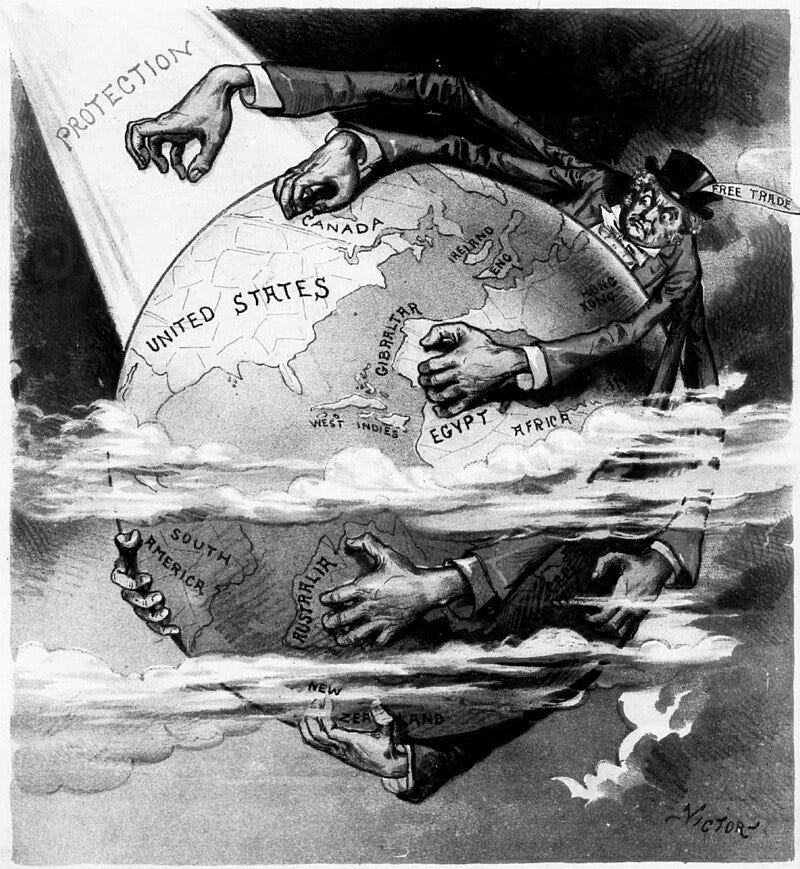
“Whenever the government of the United States shall break up, it will probably be in consequence of a false direction having been given to public opinion. This is the weak point of our defences, and the part to which the enemies of the system will direct all their attacks. Opinion can be so perverted as to cause the false to seem true; the enemy, a friend, and the friend, an enemy; the best interests of the nation to appear insignificant, and trifles of moment; in a word, the right the wrong, and the wrong, the right. In a country where opinion has sway, to seize upon it, is to seize upon power. As it is a rule of humanity that the upright and well-intentioned are comparatively passive, while the designing, dishonest and selfish are the most untiring in their efforts, the danger of public opinion’s getting a false direction is four-fold, since few men think for themselves.”
– James Fenimore Cooper (The American Democrat 1838)
This is the second instalment to “The Difference Between William McKinley’s American System School of Protective Tariffs and Today.” It is highly recommended one read the first instalment beforehand, which can be accessed here.

Recall that the American System of protectionism was most explicitly formed as protection against British free trade, the latter to which Wall Street was subservient.
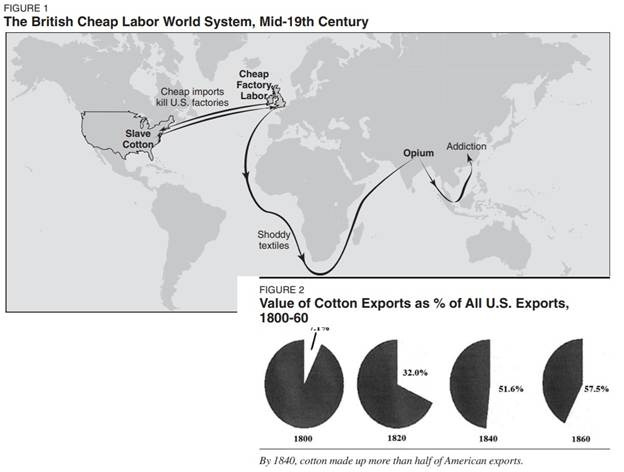
We left off in the first instalment with Henry Clay making the point most abundantly clear, that it was well known by the British system advocates of free trade that this had always as its intention the ruination of other nation’s manufacturing industries to reduce them to a state of a colony, a raw materials exporter, namely agricultural production, the natural outcome being plantations reliant on cheap labour and slavery.
As we can see, already by Henry Clay’s time the South was strongly aligning with British free trade interests and was reducing itself to a raw materials exporter, namely cotton, despite this being utterly against their own welfare and interests to which there continues to be confusion over to this day.
In order to clear the matter up in a few sentences, I would like to share a quote from Lord Robert Cecil, who later became Marquess of Salisbury, a very prominent position in British peerage and who served three times as Prime Minister of Britain. He had this to say in Parliament during the American Civil War:
“The Northern States of America never can be sure friends because we are rivals, rivals politically, rivals commercially…With the Southern States, the case is entirely reversed. The population are an agricultural people. They furnish the raw material of our industry, and they consume the products which we manufacture from it. With them, every interest must lead us to cultivate friendly relations, and when the war began they at once recurred to England as their natural ally.”
It was the battle between these two opposing economic schools of thought, that of the British System vs. the American System which led the country into the most bloody and costly war it has ever fought, the American Civil War.
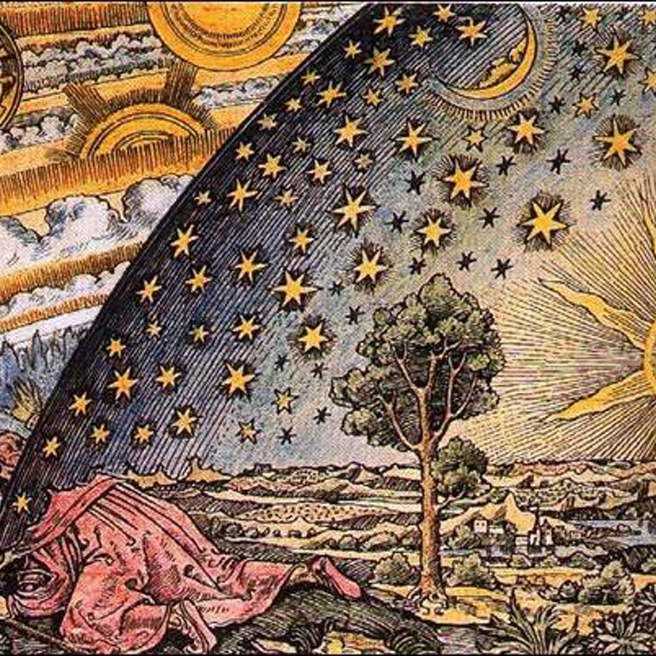
Henry C. Carey’s “Harmony of Interests” vs British Free Trade
“Two systems are before the world; the one looks to increasing the proportion of persons and of capital engaged in trade and transportation, and therefore to diminishing the proportion engaged in producing commodities with which to trade, with necessarily diminished return to the labor of all; while the other looks to increasing the proportion engaged in the work of production, and diminishing that engaged in trade and transportation, with increased return to all, giving to the laborer good wages, and to the owner of capital good profits… One looks to pauperism, ignorance, depopulation, and barbarism; the other in increasing wealth, comfort, intelligence, combination of action, and civilization. One looks towards universal war; the other towards universal peace. One is the English system; the other we may be proud to call the American system, for it is the only one ever devised the tendency of which was that of elevating while equalizing the condition of man throughout the world.”
– Henry C. Carey, The Harmony of Interests, 1851
These two opposing systems of economy and view of humankind become most strikingly clear with the culmination of the American Civil War (April 12th, 1861 – May 26th, 1865).
Sam Labrier writes in his paper “The British Empire Reacts to American Economic Policies During the Civil War”:
“Since the Confederacy was so vehemently free trade that they mandated in their constitution that it be the only economic system permitted[1], did the British aristocracy display signs that they favoured the Confederate cause to the Union. After all, despite the professed abhorrence to slavery by the British Empire, 75% of the cotton purchased by the British Empire came from the South[2]… [The British Empire] displayed a willingness to recognize the Confederacy on several occasions, and even illegally supplied the South with material aid, most notoriously with the building of the CSS Alabama.”
Although it is often claimed that Britain remained neutral during the American Civil War, this is not the true story. Britain had in fact approached Russia, under Tsar Alexander II, to join them and France (under Napoleon III) in the active military defense of the Confederate states against the Union, to which Tsar Alexander II not only considered a “casus belli” (his words) to the interests of Russia but sent his Russian navy to both the east and west American coasts, and were stationed there for several months as a deterrence to Britain and France in militarily intervening in favor of the Confederacy during the Civil War. [For more on this story refer here.]
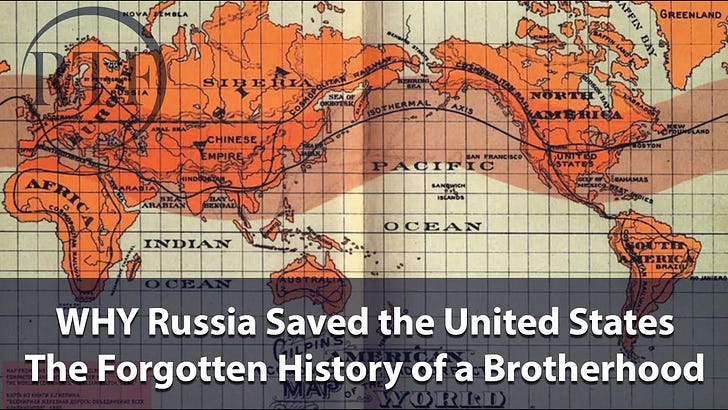
Knowing what we know from the first instalment of this paper, the fact that the South had mandated in their constitution that free trade be the only economic system permitted should show quite clearly where their true allegiance lay – with the British Empire. The Confederate constitution was completed March 11th 1861, one month before the Civil War officially broke out.
Though the subject of slavery in the South was clearly at the forefront of the American Civil War, to reduce it to this alone would be missing the bigger picture. The American Civil War was quite literally over which economic system it was ultimately going to choose - the American System vs. the British System which would in turn determine the livelihood and liberties of hundreds of millions around the globe.
In other words, slavery was the natural outcome of the economic doctrine of the British free trade system, as Henry C. Carey (1793-1879) makes abundantly clear in his 1872 book The Unity of Law. Therefore, to make the “debate” or discussion around the Civil War a merely sociological one, is to miss the true source of the injustice. Slavery was never a necessity, it was never “natural” nor had anything to do with a biological superiority etc. etc. Slavery has always and will always be an outcome of economic policy, which in turn is defined by how one views humankind, as Henry C. Carey makes the point clear in the above quote from his The Harmony of Interests. Carey knew full well from the teachings of his father Mathew Carey (one of the founding fathers of the American System school of protectionism), the Irish had been treated no better, and the argument could be made that their people had gone through an even larger extermination and enslavement program at the hand of the British, than did the African slave, that had spanned centuries.
In other words, what system of economy one adopts is the foundation upon which liberties and freedoms are determined. Do not mistake this for semantics, for you cannot decide upon what are the liberties and freedoms bestowed with a piece of paper, you cannot pick and choose such things irregardless of the economic system one operates within - the only outcome to a system that upholds cheap labour, is a cheap people. Thus, you cannot claim to promote both liberty and British free trade, you cannot have the worshipping of profit and the motto “buy cheap and sell dear” and have a free and prosperous people.
It was thus not a white vs black issue at the end of the day. Millions around the world had been subjugated to the same system of oppression. It was this economic system, that viewed the majority as cattle to be culled (no matter the skin color, no matter the geographic location), that needed to be rooted out.
In fact, the introduction of slavery into the United States was the direct outcome of the British System.

Robert Ingraham writes in “A Truthful History of American and the British Slave Trade”:
“Up until about 1640-1650, slavery, as it later became codified, did not actually exist in the American colonies. In the 13 American colonies, all of the slaves were brought in under the authority of the British monarchy, with the most notorious operation being the Royal Africa Company, headed by the future King James II. Many of the colonies, particularly those which retained a semblance of self-rule, resisted the deluge of slaves. Massachusetts, Virginia, Pennsylvania, South Carolina, and other colonies all passed laws banning or restricting the importation of slaves, and all such laws were nullified by the Board of Trade and the Privy Council in London.
With the founding of the Royal Africa Company in 1660, Britain’s rulers became determined to impose on the colonies an economic system based on slave labor, exactly as they did in Barbados and their other Caribbean colonies. Key to this was the eradication of self-government among the colonies. One by one, Charter Colonies, such as Massachusetts, Connecticut and Virginia, and Proprietary Colonies, such as Pennsylvania and Maryland, had their charters revoked and their independence quashed.
By the time of the Treaty of Paris in 1763, all 13 colonies had Royal Governors, appointed by the monarchy, with the authority to override the decisions of elected legislative bodies within the colonies. These developments coincided with the massive expansion of slave importation carried out under Royal supervision in the 18th century.
To repeat the point, it was the British monarchy which imposed – by force of arms and legal prosecution – a slave economy on the 13 colonies from 1650 to 1775, and it was that monarchy against which the colonists – white and black – rebelled in 1775.”
In the 18th century, the British monarchy brought more than 6 million slaves out of Africa. This was an imperial policy that was under the control of the Monarchy, the Privy Council, the Bank of England, and the Royal Africa Company.
Slave traffic, much like the later opium/narcotics traffic with the British East India Company and the Opium Wars, was a financial policy, with huge profits financing the London stock market and the Bank of England. Afterall, the Royal African Company was established in 1660 by the House of Stuart and City of London merchants to trade along the African coast.[3]

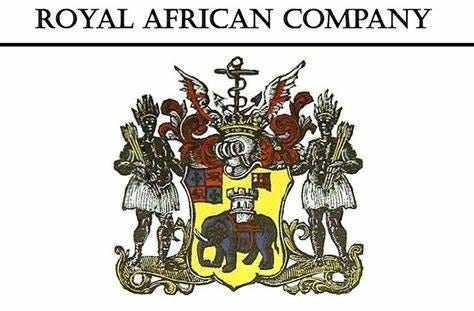
The 13 colonies were resistant to these enforced British policies and their efforts underwent many reversals and crises but finally by 1776 the call went forth as a self-evident truth that all men are created equal and in 1789 a new republic was formed pledged to defend the general welfare and secure the blessings of liberty for future generations.
Contrary to how many treat the American Revolution today, as if it were about equal rights for whites only, white and black people fought side by side during the Revolution on the side of liberty against the oppressive British Empire.
Marquis Lafayette who organised French support and was instrumental in winning the American Revolution against the British, remarked during his 1824 tour of America (which was a very different America unfortunately by then) that he was astonished to discover the aggravation of the prejudices against the blacks saying that during the revolutionary war, black and white soldiers regularly ate meals together in the mess hall without hesitation. Thus, curious as to where did the prejudice that was rampant during the 1824 period come from.
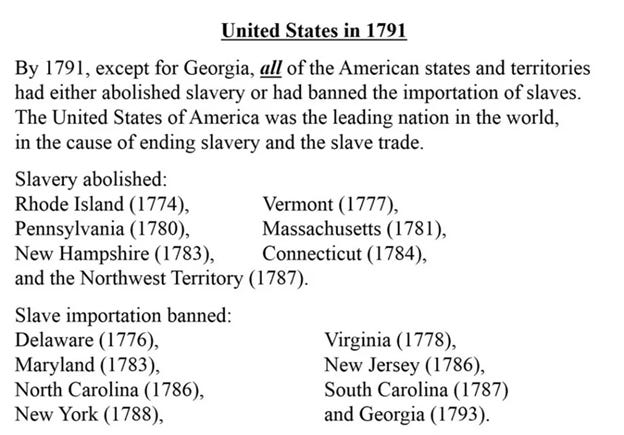
So, the United States was moving in a very clear direction to ending slavery after the independence from the British Empire.
Also recall in the first instalment of this paper the origins of Wall Street, which was created in service to the slave trade of the Dutch West India Company and the British East India Company (who modeled themselves on the Dutch system). It was from these institutions that the slave market was first introduced with the sale and rental of enslaved Africans and Indians.[4] [5]This market operated from 1711 to 1762 at the corner of Wall and Pearl streets. It was the natural outcome of a system which held the maxim of “buying cheap and selling dear” as its core philosophy.
This has been the core battle within the United States, as to which school of economics it would ultimately adopt as its philosophical outlook. As is made clear by the opening Henry C. Carey quote, it comes down to how you view humankind, the worth of the individual; and how you define wealth, value, liberty and happiness which differentiates the schools of economics. The two systems, the British vs. the American system as defined by Carey are inherently opposed to one another, they are not compatible with one another, and we cannot say with honesty that both can rule over a nation’s policies.
As Henry C. Carey writes in his The Harmony of Interests (1851), “To raise the value of labour throughout the world, we need only to raise the value of our own.”
Again to reiterate, the American System of economics, and especially protectionism was directed against the economic warfare and foreign policy that was being waged by the British Empire through their system of free trade.
Henry C. Carey would write in his The Slave Trade Foreign and Domestic published in 1853:
How can slavery be extinguished, and man be made free?...To terminate the African slave trade, we need…to raise the value of man in Africa. To terminate the forced export of men, women, and children from Ireland, we need only to raise the value of men in Ireland…To bring the trade in slaves, of all colours and in all countries, at once and permanently to a close, we need to raise the value of man at home, let that home be where it may.
…”It was” says Macpherson, “the European policy” to prevent the Africans from arriving at perfection in any of their pursuits, “from a fear of interfering with established branches of trade elsewhere.” More properly, it was the English policy.
[Carey quotes William Pitt the Younger] “The truth is,” said Mr. Pitt, in 1791, “There is no nation in Europe which has plunged so deeply into this guilt as Britain. We [the British] stopped the natural progress of civilization in Africa. We cut her off from the opportunity of improvement. We kept her down in a state of darkness, bondage, ignorance, and bloodshed. We have there subverted the whole order of nature; we have aggravated every natural barbarity, and furnished to every man motives for committing, under the name of trade, acts of perpetual hostility and perfidy against his neighbour. Thus had the perversion of British commerce carried misery instead of happiness to one whole quarter of the globe. False to the very principles of trade, unmindful of our duty, what almost irreparable mischief had we done to that continent! We had obtained as yet only so much knowledge of its productions as to show that there was a capacity for trade which we checked.”
[Carey states] How was all this done? By preventing the poor Africans from obtaining machinery to enable them to prepare their sugar for market, or for producing cotton and indigo and combining them into cloth – precisely the same course of operation that was pursued in Jamaica with such extraordinary loss of life. Guns and gunpowder aided in providing cheap labour…Such are not the commodities required for raising the value of man in Africa…
By countries remaining solely raw material exporters, largely at the mercy of Britain whose policy was to buy cheap and sell dear, this in turn created the inescapable outcome of an ever-cheapening labour base with its most radical form being that of slavery.
If countries were to remain as raw material exporters, cheap labour which would in turn create a cheap people, would always without fail be the outcome.
Only by developing a manufacturing base could countries raise the value of labour and thus the value of their people, who would no longer be at the mercy of competing for the lowest bid for their services. Carey would also make a point that diversification of a manufacturing base was essential to raise the value of labour, and not to be reliant on the production of just one thing.
Carey explains that the reason why Africans were being sold by Africans to the British as trade for guns (that did not even work and often burst when fired), gunpowder and alcohol was because Africans had been prohibited from creating their own manufacturing base which resulted in their cheapening of labour. As William Pitt the Younger himself acknowledges, the British had played a direct role in this prohibition.
As Carey makes the point, Britain had filled it ships headed to Africa with only these commodities, guns, gunpowder and alcohol, and in turn would fill their ships heading back from Africa with the bodies of African slaves. Nothing was offered for trade by the British that constituted as essential or could raise the standard of living, but rather only commodities that would further lower the value of an individual, thus keeping them as a raw materials exporter and subjecting them to the global auction for cheap labour since their people had become cheap as a result of this free trade with Britain.
We can see the dishonesty of such a policy. Britain’s argument for enforcing the trade of opium to China was that there was a “demand” for it. And it is clear that this same line of argument was used in their trade with Africans. Yet the truth of the matter was, as is admitted by William Pitt the Younger himself, that essentials that were needed to build a manufacturing base were in fact prohibited in Britain’s trade with both Africa and Asia so as not to interfere with the status quo, i.e. Britain’s global trade dominance.
This so-called justification for where there is a demand there will always be a supply in trade is equivalent to stating that the people desire vice and crime if they can obtain it and think they can get away with it, so let us make such things abundant throughout our communities. There would most certainly be a demand for such things, and thus vice and crime should be made ever more abundant and accessible to meet an expanding demand. We can clearly see from such a policy that any community that would adopt such foolishness would bring about the ruination of its people.
No community nor nation would be immune to such predatory tactics if they were allowed free reign to trade in such things. And it would be the height of folly to claim that this was not a form of warfare to push the trade in such things on other nations, where Britain’s free trade was the enforcer of opium production in India (which was only made possible after they destroyed the textile industry in India), and to which the British forcibly sold to China, guns and alcohol to the African, and African slaves to the Americans. In turn, all these countries were expected to trade their raw materials for cheap to the British manufacturing base, in return for their own debasement.
Carey continues in his The Slave Trade Foreign and Domestic (1853):
Such are not the commodities required for raising the value of man in Africa, and until it can be raised…the export of men will be continued from the African coast as certainly as the export from Ireland will be continued so long as men are cheaper there than elsewhere…so long as the people of India shall be allowed to do nothing but raise sugar and cotton for a distant market…
To stop the export of men from that important portion of the earth, it is required that we should raise the value of man in Africa, and to do this, the African must be enabled to have machinery, to bring the artisan to his door, to build towns, to have schools, and to make roads.
...
In considering what is the duty of this country [the United States], every man should reflect that whatever tends to increase the quantity of raw produce forced on the market of England, tends to be the cheapening of labour and land everywhere, to the perpetuation of slavery, and to the extension of its domain – and that whatever tends to the withdrawal of such produce from that market tends to raising the value of land and labour everywhere, to the extinction of slavery, and to the elevation of man.
The system commonly called free trade tends to produce the former results; and where man is enslaved there can be no real freedom of trade. That one which looks to protection against this extraordinary system of taxation, tends to enable men to determine for themselves whether they will make their exchanges abroad or at home; and it is in this power of choice that consists the freedom of trade and of man. By adopting the “free trade,” or British, system we place ourselves side by side with the men who have ruined Ireland and India, and are now poisoning and enslaving the Chinese people [First Opium War (1839-1842) and Second Opium War (1856-1860) waged by Britain against China]. By adopting the other, we place ourselves by the side of those whose measures tend not only to the improvement of their own subjects, but to the emancipation of the slave everywhere, whether in the British Islands, India, Italy, or America.
…
Whatever tends to increase the power of man to associate with his neighbour man, tends to promote the growth of commerce, and to produce that material, moral, and intellectual improvement which leads to freedom. To enable men to exercise that power is the object of protection. The men of this country, therefore, who desire that all men, black, white, and brown, shall at the earliest period enjoy perfect freedom of thought, speech, action, and trade, will find, on full consideration, that duty to themselves and to their fellow men requires that they should advocate efficient protection, as the true and only mode of abolishing the domestic trade in slaves, whether black or white.”
Henry C. Carey was the chief economic advisor to President Lincoln. It was during the Lincoln administration that protectionism was renewed, under the Morrill Tariff, and where industrial projects were once again emphasised with the recognition that this would in turn increase the prosperity of the people. This reintroduction of protectionism was waged against Britain’s heavy push for their system of free trade.
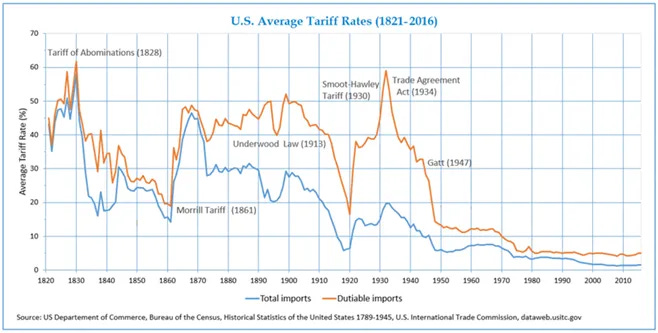
As we can see from the above graph, it was most clearly under the Lincoln administration that protectionism was reintroduced, to the vehement protest of the Southern Anglophiles and the British.
W. Allen Salisbury writes in his book The Civil War and the American System - America’s Battle with Britain, 1860-1876:
“On December 3, 1861, Lincoln laid out the American System as the guiding principle of his Administration, a course he was to follow up to and including the day of his assassination. He urged Congress to consider the proposal by Carey to begin the construction of a railroad system into North Carolina, Kentucky, and Tennessee for the purpose of enabling the development of the mining and ore and other industrial interests in these southern states.
Such transportation facilities were the obvious first step toward industrializing the South, a fact left out of the texts of modern day U.S. historians to create the myth that Lincoln’s reconstruction policy was to readmit the South as it was.”
In order to showcase and make most abundantly clear Britain’s support of the Confederacy’s adoption of free trade and its direct opposition to Henry C. Carey’s promotion of the American System school of economics, I will share some archives from British press, which were researched by RTF lecturer Sam Labrier and originally published on the Canadian Patriot website.
Sam Labrier writes in “The British Empire Reacts to American Economic Policies During the Civil War”:
Beginning in the antebellum period, we find from the Times editorial staff a great deal of praise for the last official act of President Franklin Pierce, lowering tariff rates in 1857.[6] Already there is substantial evidence that according to the economists of the British Empire, free trade is the only economic choice possible. They refer to it on several occasions as scientific truth, while theories of protection are compared with alchemy.[7]
A disdain for democracy is also demonstrated, since it is remarked “that Democracy must not claim among its merits the support or development of Free Trade. Our own Chartists opposed it, Democratic America clings to a protective tariff, while free commercial ideas find refuge in the slave holding South, and we are much mistaken if under the rule of universal suffrage England would be able to maintain the liberal principles of her tariff.”[8]
In other words, democracy is deficient, because it does not recognize the virtues of free trade [according to the British press].
The Times attempted to rebut its opponents who argued that free trade is a theory of elites and has never been popularly adopted “by any people in the world.” Agreeing with their opponents, the Times lamented “we fear that scientific truth, of which free trade is a part, is only the property of classes qualified by education to comprehend.”[9] If only free trade were adopted worldwide, “there will be no limit to the range of British enterprise.”[10]
Leading up to the elections [in 1860] the Times criticized the “protectionist errors which cloud the understanding of the Republicans.”[11] Upon Lincoln’s election, the first move of the Republicans in Congress was an increased tariff. The brainchild of Henry Carey, it was sponsored in the House by Carey ally Justin Morrill of Vermont. Passed just two days before Lincoln took office, it infuriated the British Empire.
In articles and editorials they oscillated between blaming it for certain future economic upheaval and assuring their readership that England will find new outlets “for our cheaper and superior goods,” and “America will be the only loser.” They claimed that free trade is the “natural system” of the South, because they are agricultural and export-driven economies.[12]
A letter to the Times agrees that “Southern people are clearly in favor of free trade, and the Morrill bill [Morrill Tariff], if passed, will render a reconstruction or a pacific compromise more impossible than before.”[13]
Recall from the first instalment of this paper that it was during the presidencies of Andrew Jackson (1829-1837) and his colleague from the same pro-British free trade/Wall Street school Martin Van Buren (1837-1841) that protectionism fell dramatically. There was a slight increase during the presidency of John Tyler but again fell until the Morrill Tariff which dramatically bolstered protectionism.
Sam Labrier continues in his paper:
[In reaction to the Morrill Tariff a British] editorial stated that “in Newcastle it is considered that it will be impossible to do business with the United States on the terms set out in the tariff.”[14] A week after that, the Times was declaring that Lincoln ought to recognize the Confederacy [i.e. their pro-free trade Constitution], and that he should deal with things as they are, not as they ought to be, and that the [Morrill] tariff renders the return of the seceding states virtually impossible.[15] As the tariff was implemented one letter to the editors from an American was printed assuring them that the tariff is almost as unpopular in America as it is in Europe and will most certainly be repealed by the incoming Congress.[16]
… Despite all the hyperbole, by the end of 1861, the Times was editorializing that the war is a war over slavery, and not tariffs, and even seemed to imply that free trade and slave labour were synonymous, as were protection and free labour, without realizing it.[17]
It is most remarkable the reaction by the British press, most notably The Times which we can safely regard as the official representation of the views and perspectives of the British Empire, that they considered the Lincoln Administration’s protectionism under the Morrill Tariff (the brainchild of Henry C. Carey), as anathema to the supposed interests of the Confederacy. That, according to The Times, the Morrill Tariff would make it impossible for the Confederate states to “rejoin” with the Union. Thus, it is no exaggeration to state here that the battle between the American System of protectionism vs British free trade was very much at the center of what led to the American Civil War. And that the matter of slavery was the natural outcome of the latter.
Thus, to outlaw free trade and promote the American System of economics and its philosophy of protectionism, i.e. to build up a manufacturing industry, has as its natural outcome the abolishment of slavery. It is most clear from the writings of Henry C. Carey that the abolishment of slavery was the goal of the Lincoln Administration, but that this could only come about through economic policy and the preservation of the nation.
It was never about one issue over another, the preservation over the union over the freeing of slaves, it was all a part of the same goal always, the freedom of the people which would come from economic independence from the British system of economic debasement that had reached a global scale.
As Tsar Alexander II said himself in an interview with Wharton Barker, the separation of the United States was considered a casus belli for Russia. Tsar Alexander II, who held sole power to declare war for Russia, stated in an interview to the American banker Wharton Barker on Aug. 17, 1879 (Published in The Independent March 24, 1904):
“In the Autumn of 1862, the governments of France and Great Britain proposed to Russia, in a formal but not in an official way, the joint recognition by European powers of the independence of the Confederate States of America. My immediate answer was: `I will not cooperate in such action; and I will not acquiesce. On the contrary, I shall accept the recognition of the independence of the Confederate States by France and Great Britain as a casus belli for Russia. And in order that the governments of France and Great Britain may understand that this is no idle threat; I will send a Pacific fleet to San Francisco and an Atlantic fleet to New York.
…All this I did because of love for my own dear Russia, rather than for love of the American Republic. I acted thus because I understood that Russia would have a more serious task to perform if the American Republic, with advanced industrial development were broken up and Great Britain should be left in control of most branches of modern industrial development.”
What was Tsar Alexander II referring to exactly when mentioning the advanced industrial development of the American Republic? He was referring to the Hamiltonian system of economics, aka the American System. Notably, Alexander Hamilton’s 1791 Report on the Usefulness of the Manufactories in Relation to Trade and Agriculture which was published in St. Petersburg in 1807, sponsored by Russian Minister of Finance D.A. Guryev.
It was Hamilton who pioneered a new system of political economy coming out of the war of Independence which saw America bankrupt, undeveloped, and agrarian. Hamilton solved this problem by federalizing the state debts and converting it into productive credit, channelled by national banks into large scale internal improvements with a focus on the growth of manufacturing.
The system and economics of slavery and cheap labour are eliminated under this system. As Henry C. Carey outlines in great detail in his book Unity of Law (1872), the economy of cheap labour, as promoted by the British free trade, will always lead to an auction for the cheapest labour. This in turn turns anyone who adopts such a policy to that of a raw materials exporter and thus to a colonial status. Once one has only cheap labour to depend on, there is no money for anything else. No money to invest on improvements, no money to invest in machinery. Thus, cheap labour will always in turn impoverish all, including the so-called “masters.”
This was something that was in fact clearly seen in the American South. Poverty levels were quite high amongst white people. Most white people in the South were illiterate and lived in squalor. Thus, the mythical romanticism of the Southern gentlemen, gentlewomen and way of life must be regarded for what it in fact truly was, it was a system of increasing scarcity and poverty and most white people lived in terrible conditions during these times.
As Frederick Douglass (1818-1895) would remark in his autobiography, when he had escaped as a young man in his twenties from the South to Massachusetts, he was astonished to see black people in the North reading the newspaper, more knowledgeable about world affairs and using a vocabulary far superior to most white people in the South who couldn’t even read and even superior to that of the slaveholders.
Frederick Douglass wrote in his autobiography:
“Living in Baltimore as I had done for many years, the reader may be surprised when I tell the honest truth of the impressions I had in someway conceived of the social and material condition of the North. I had no proper idea of the wealth, refinement, enterprise and high civilisation of this section of the country…I had been taught that slavery was the bottom fact of all wealth. With this foundation idea I came naturally to the conclusion that poverty must be the general condition of the people of the free states. A white man holding no slaves in the country in which I came, was usually an ignorant and poverty-stricken man. Men of this class were contemptuously called ‘poor white trash.’ Hence, I supposed that since the none slaveholders of the South, were as a class, ignorant, poor and degraded, the non-slaveholders at the North must be in a similar condition.
New Bedford [Massachusetts], therefore, which at the time was in proportion to its population, really the richest city in the Union, took me greatly by surprise, in the evidences it gave of its solid wealth and grandeur. I found that even the laboring classes lived in better houses, that their houses were more elegantly furnished and were more abundantly supplied with conveniences and comforts, than the houses of many who owned slaves on the Eastern Shore of Maryland. This was true not only of the white people of that city, but it was so of my friend Mr. Johnson [who was a black man working for the Underground Railroad and got Douglass established in New Bedford]. He lived in a nicer house, dined at a more ample board, was the owner of more books, the reader of more newspapers, was more conversant with the moral, social and political condition of the country and the world, than nine-tenths the slaveholders in all of Talbot County.
I was not long in finding the cause of the difference, in these respects, between the people of the North and South. It was the superiority of educated mind over mere brute force…One of the first incidents which impressed me with the superior mental character of labor in the North over that of the South, was the manner of loading and unloading vessels. In a southern port twenty or thirty hands would be employed to do what five or six men, with the help of one ox, would do at the wharf in New Bedford. Main strength - human muscle - unassisted by intelligent skill was slavery’s method of labor. With a capital of about sixty dollars in the shape of a good-natured ox attached to the end of a stout rope, New Bedford did the work of ten or twelve thousand dollars, represented in the bones and muscles of slaves, and did it far better.”
As we can appreciate with Douglass’ comparison of the two systems real wealth comes from efficiency and intelligent labor, which slave labour will never be. With a simple machine-tool, that is, a pulley system, with an ox and a few men, Massachusetts had shown itself capable of doing the same task for $60 that would cost the South $10,000 to do with slave labour.
Thus, we can answer the question of what truly caused the extinction of the Southern way of life and it is for this very reason. It is simply not sustainable - and is built for that very purpose. It can only operate as a parasite but cannot generate increasing wealth of its own. It is a system of hierarchy based on scarcity, on the haves and the have-nots as its food chain. It is the short-sighted game of who can stay on top in the midst of diminishing returns. And it is the natural consequence of anyone who is foolish enough to live by the code of free trade.
As Carey also points out in his book The Unity of Law, which should not come as a surprise, that well-paid labour always outperforms and has a much greater efficiency in production with less error than cheap labour/slavery. It is thus never in anyone’s best interests, not even of the employer, to seek out or enforce cheap labor.
Sam Labrier continues in his paper “The British Empire Reacts to American Economic Policies During the Civil War”:
In April they chastised the American plans to support the construction of a transcontinental railroad “in the midst of its gigantic struggle,” adding that the project “will add materially to the prosperity of California at the expense (…) of the general government.”[18] In a historical bit of irony, the Times wrote only days after Gettysburg that the war was proving the South stronger, adding that the South produces all the good soldiers, generals and statesmen, and that qualified statesmen cannot get elected in the tariff loving North, since according to the Times, a qualified statesmen is by definition someone who supports free trade.[19]
…
1864 brought forth renewed attacks [from the British press] on the protectionist system as a whole. Again we see references to free trade being equivalent to scientific truth… As late as December of 1864, despite all Northern military victories, the British continued urging a recognition of the Southern Confederacy,[20] as well as an immediate peace, hoping strongly for Lincoln to reverse “the forfeiture of the whole landed property of the South and the forcible emancipation of the negroes,” and “restore to the rebels by one Proclamation what he has taken from them by another.”
Earlier in September they claimed that as the North overreached in its desire to punish the South, so too it did with implementing the protectionist system. They immodestly pointed out that they had earlier predicted that maintaining such a high tariff would prove impossible, but that those warnings were treated “as the dictates of interested malevolence,” and lamented that democracies are “incapable of profiting from the experience of others,” or of learning “the great economical truths which determine the policies of enlightened nations.”[21]
Ironically, by December, they were instead writing “in spite of blockades and protectionist tariffs in America, the exports of this country have increased beyond all expectation.”[22] Upon Lincoln’s re-election, the readers of the Times were undoubtedly displeased to read Lincoln’s December address to Congress, in which he spoke proudly of the success of the national banking system.[23]
This victory, though temporary, was a massive one against the British System in favor of the American System of economics and has almost entirely been written out of the textbooks within the United States itself.
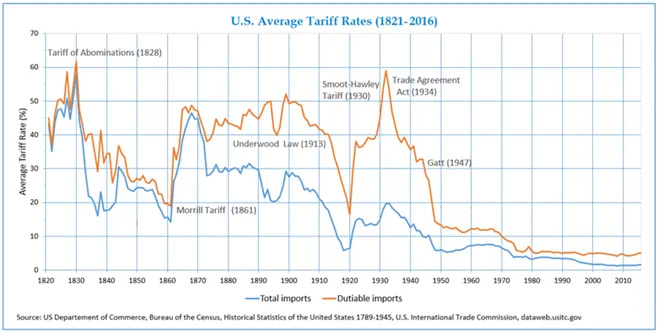
However, we can see there is a very clear trend going on depending on the school of economics dominates during a US presidency. It is a direction, either up or down in its trajectory for the manufacturing industries of a country and its true wealth and prosperity.
It is a battle that has been waged since the nation’s earliest days. And it is not a coincidence that we see protectionism take a dramatic plunge from the 1950s on, when a consistent policy of deindustrialisation was taking place. A policy that resulted in the creation of America’s Rust Belt.
After nearly 70 years of embracing free trade and the belief that “trade will regulate itself” with religious zeal, and that Adam Smith’s invisible hand has replaced God and any morality in how an economy is to be run; the jury is out – it has been out for decades but many were too foolish to notice. There should no longer be any confusion as to where the source of the problem lies.
Free trade has done just what the leaders of the American System have been warning us all along, that it will gut your industries, expand an unpayable debt, and impoverish the nation.
Yet today we suffer from amnesia of this great battle that was waged between two opposing systems not that long ago. Today we have the confused banter claiming to be pro-protectionism while simultaneously being against the actual founders and proponents of said system, most especially with the legacies of Alexander Hamilton and the presidency of Abraham Lincoln, while promoting such pro-Wall Street presidents such as Andrew Jackson as so-called protectionist presidents, to which they most certainly were not.
The only reason such contradictions and outright lies can exist today is because Americans have allowed themselves to forget their history. As George Orwell would infamously state in his book 1984, “Who controls the past controls the future; who controls the present controls the past.”
Today we hear the call for the reinstatement of protectionism, such as within the current administration, while simultaneously continuing the promotion of free trade and pro-Wall Street/City of London antics, most notably with the present U.S. Treasury Secretary Scott Bessent, who is quite literally Wall Street in a suit, supposedly calling for the revival of protectionism. Did he have a change of heart? Or is there something more sinister in the mix?
As has been made abundantly clear at this point, you cannot have both, you cannot advocate for protectionism as well as the free trade doctrine and the belief that “trade will regulate itself”. They are the antithesis to one another. And as noted in the first instalment of this paper, not all tariffs function to actually bolster the domestic economy, and can actually hinder it. This difference is largely due to whether a tariff is revenue focused or production focused. As we will see in the third and final instalment of this paper, William McKinley himself was quite explicit and outspoken on this matter, that revenue tariffs functioned to, in fact, benefit British free trade.
A difference that I am quite certain Scott Bessent is aware of. Afterall, he was an adjunct professor of economic history at Yale from 2006 to 2011.
[The third and final instalment to this paper will focus on William McKinley’s promotion of the American System protectionism following the school of Alexander Hamilton, Henry Clay and Mathew Carey. And what this all means for today’s call for a so-called return to protectionism.]
“To British free trade it is, as I have shown, that we stand indebted for the present Civil War. Had our legislation been of the kind which was needed for giving effect to the Declaration of Independence, that great hill region of the South, one of the richest, if not absolutely the richest in the world, would long since have been filled with furnaces and factories, the laborers in which would have been free men, women, and children, white and black, and the several portions of the Union would have been linked together by hooks of steel that would have set at defiance every effort of the ‘wealthy capitalists’ of England for bringing about a separation. Such, however, and most unhappily, was not our course of operation.”
-Henry C. Carey The Way To Outdo England Without Fighting Her (1865)
“I am humble Abraham Lincoln. I have been solicited by many friends to become a candidate for the Legislature. My politics are short and sweet, like the old woman’s dance. I am in favor of a national bank. I am in favor of the internal improvement system, and a high protective tariff.”
-Abraham Lincoln Announcement of his candidacy for State Representative 1832
“I was an old Henry Clay Tariff Whig. In old times I made more speeches on that subject than any other. I have not since changed my views.”
-Abraham Lincoln Letter to Dr. Edward Wallace 1859
You can read Part I and II to this series below:


Cynthia Chung is the President of the Rising Tide Foundation and author of the books “The Shaping of a World Religion” & “The Empire on Which the Black Sun Never Set,” consider supporting her work by making a donation and subscribing to her substack page Through A Glass Darkly.
Also make sure to watch our RTF and CP films and documentaries here.
Footnotes:
[1] “Constitution of the Confederate States of America, Article 1, Section 8(1),” https://en.wikisource.org/wiki/Constitution_of_the_Confederate_States_of_America
[2] Frenise A. Logan, “India—Britain’s Substitute for American Cotton, 1861-1865,” The Journal of Southern History, Vol. 24, No. 4 (Nov 1958): 472
[3] "The King Grants the Right to Trade in Africa". National Archives. Retrieved 18 June 2025.
[4] Slave Market Archived March 6, 2013, at the Wayback Machine. Mapping the African American Past, Columbia University.
[5] Peter Alan Harper (February 5, 2013). How Slave Labor Made New York Archived January 31, 2021, at the Wayback Machine. The Root.
[6] Editorial. The Times (London, England), Tuesday, Mar 24, 1857; pg. 8; Issue 22636
[7] Editorial. The Times (London, England), Saturday, Mar 03, 1860; pg. 9; Issue 23558.
[8] Editorial. The Times (London, England), Tuesday, Feb 14, 1860; pg. 9; Issue 23542.
[9] Editorial. The Times (London, England), Saturday, Mar 03, 1860; pg. 9; Issue 23558.
[10] Editorial. The Times (London, England), Friday, Feb 24, 1860; pg. 7; Issue 23551
[11] Editorial. The Times (London, England), Thursday, Oct 11, 1860; pg. 6; Issue 23748
[12] Editorial. The Times (London, England), Tuesday, Mar 05, 1861; pg. 9; Issue 23872.
[13] F.T. & Co.,“The United States Tariff,” Letters, The Times (London, England), Wednesday, Mar 13, 1861; pg. 10; Issue 23879.
[14] Editorial. The Times (London, England), Tuesday, Mar 12, 1861; pg. 9; Issue 23878.
[15] Editorial. The Times (London, England), Tuesday, Mar 19, 1861; pg. 9; Issue 23884.
[16] Editorial. The Times (London, England), Wednesday, May 01, 1861; pg. 12; Issue 23921.
[17] Editorial. The Times (London, England), Wednesday, Nov 20, 1861; pg. 8; Issue 24095
[18] Times Correspondent, “California,” The Times (London, England), Saturday, Apr 04, 1863; pg. 10; Issue 24524
[19] Editorial. The Times (London, England), Thursday, Jul 09, 1863; pg. 8; Issue 24606.
[20] Editorial. The Times (London, England), Wednesday, Dec 14, 1864; pg. 6; Issue 25055.
[21] Editorial. The Times (London, England), Saturday, Sep 10, 1864; pg. 8; Issue 24974
[22] Editorial. The Times (London, England), Wednesday, Dec 14, 1864; pg. 6; Issue 25055.
[23] The President’s Message. The Times (London, England), Tuesday, Dec 20, 1864; pg. 4; Issue 25060
Really terrific writing Cynthia. Thank you for this!!! It is the clearest explanation I have ever read on what the civil war was actually about. Very important for today.
Knew the war was fought because of economics, but was not able to articulate it until now, since I have more of the facts. Thank you.