
Tiberius’ Temple of Apollo: From Clairvaux’s Templars & Erotic Mysticism to Zinzendorf’s Moravian Brotherhood & the Sex Cult Communes
Towards a New Jerusalem: A Gathering of Jacobites, Scottish Rite-Rosicrucian Freemasons, Moravians, Sabbatian Jews and the Father of Theosophy Part III

[For Part I of this series refer here, for Part II refer here.]


Babylon was the last conquest of Cyrus the Great in 539 BCE and would form the heart of the Persian Empire. According to the Book of Ezra, from the Hebrew bible, Cyrus the Great ended the captivity of the Jews in Babylon in 538 BCE, the year after he captured Babylon, allowing the Jews to return to Jerusalem after 60 years of exile.
The exile ended with the return under Zerubbabel the Prince (so-called because he was a descendant of the royal line of David) and Joshua the Priest (a descendant of the line of the former High Priests of the Temple) and their construction of the Second Temple in the period from 521 to 516 BCE.[1]
Thus, Cyrus the Great’s conquest of Babylon and his freeing of the Jews led to the culmination of the Second Temple of Jerusalem.
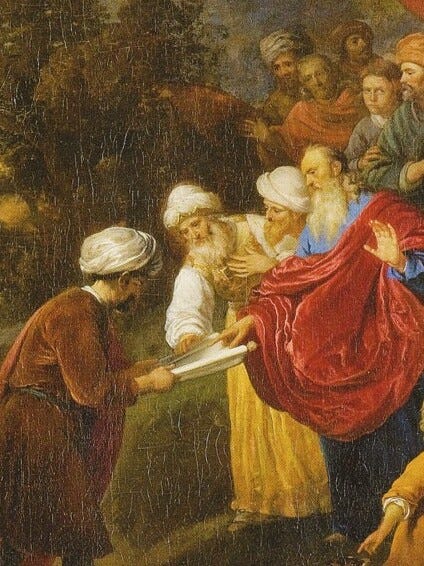
The Babylonian priesthood (led by the priests of Marduk) seeing that Cyrus the Great’s victory over Babylon was inevitable, decided to open the doors of Babylon to him. It was said that the entire royal court was slaughtered including the King of Babylon and all those thought loyal to him, but that the Marduk priesthood were allowed to continue their function entirely preserved. The Marduk priests were allowed to go about their daily rituals as if nothing had happened because they had made an agreement with Cyrus the Great.
The Marduk priesthood, just like the Apollo priesthood at Delphi, were an extremely powerful force with a broad network. No king appeared to be free of this form of control. And thus, the Marduk Temple appears to be the same system later put in place at Apollo’s Temple of Delphi in Greece.
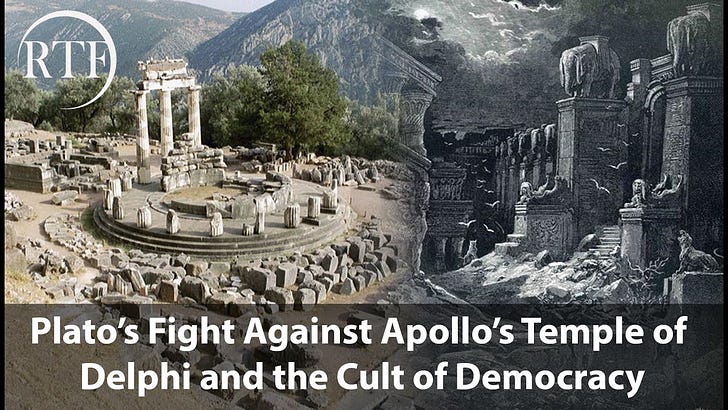
The Apollo temples were also the wealthiest banking centers in the Mediterranean world. They would finance military campaigns, politicians, and the careers of generals who could be used to advance their agenda.
Not even King Leonidas with his legendary force of 300 against Persia was able to avoid a visit and pay tribute to Apollo’s Cult of Delphi before setting on to the Battle at Thermopylae in 480 BCE.
Apollo also known as the god of the Sun, was also the god of Prophecy. The Cult of Delphi was the most influential and prominent cult in Ancient Greece and likely had connections with the Cult of Marduk based in Babylon and the Cult of Horus based in Egypt.
In the Cult of Delphi a priestess who it was said was intoxicated by the gas vapors of the chasm would be the intermediary messenger who would deliver the words of the gods in indecipherable gibberish to which the priests of Delphi would translate for those asking for prophecy. It was said that no large political or military decision was ever made in Greece, most notably in Athens and Sparta, without first consulting the Oracle at Delphi.
In Egypt it was the pharaoh who acted as the obligatory intermediary between the gods and humans. Horus is the god of kingship, protection, the Sun and Sky, and thus, can be seen as an Apollo equivalent. Horus represented the kingship itself and was seen as a protector of the pharaoh. The hierarchical priesthood overseeing the Egyptian Cult of the pharaohs’ Pantheon of Gods, as well as the rights of initiation, was at the heart of the growth of many secret societies across thousands of years.
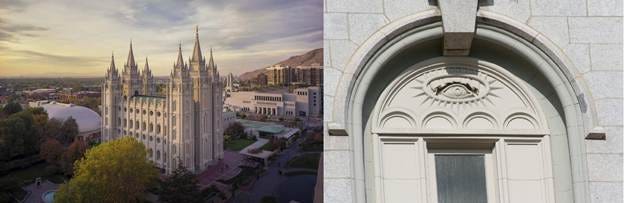
One example of this is the eye of Horus found on walls of the Mormon Salt Lake City Temple headquarters. The Mormons are a “Christian” church that also originated its own freemasonic lodges. [For more on this refer here.]
In Babylon, the god Marduk whose name means calf of the Sun and thus is the son of the Sun can also be seen as an Apollo equivalent.
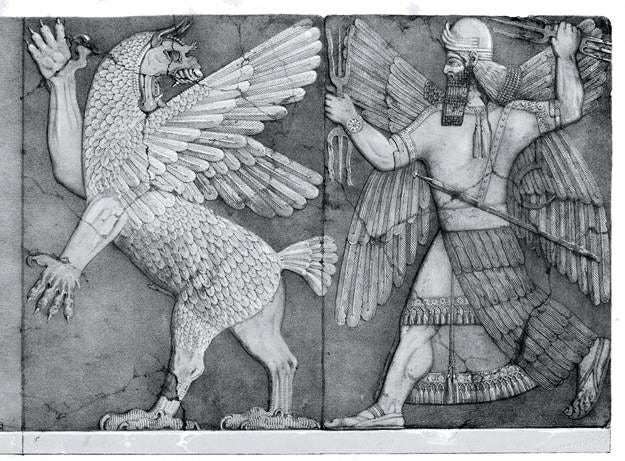
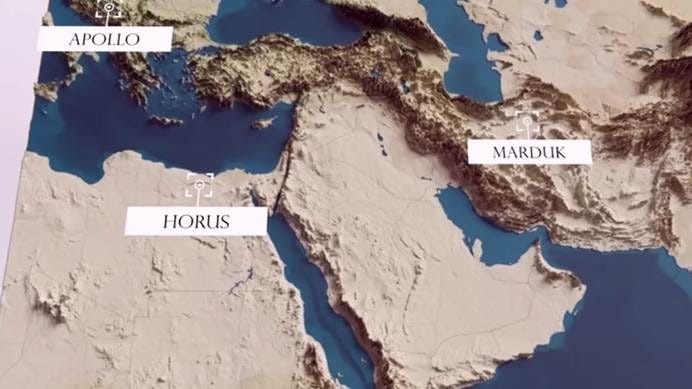
Like the Cult of Apollo at Delphi and the Cult of Horus in Egypt (aka “the all-seeing eye”), no king would decide on making war or peace without first consulting the Marduk priesthood. It is likely that the networks of Apollo, Horus and Marduk were linked under a common network and thus controlled a great deal of intelligence and decisions for war and peace between these nodes. The priests effectively operated above all else with no specific loyalty towards the kings they were advising nor the welfare of their people.
These mystery cults would continue to play a central role within Rome, Byzantium and later Empires. And continued for millennia in their influences, one could argue, to this day.
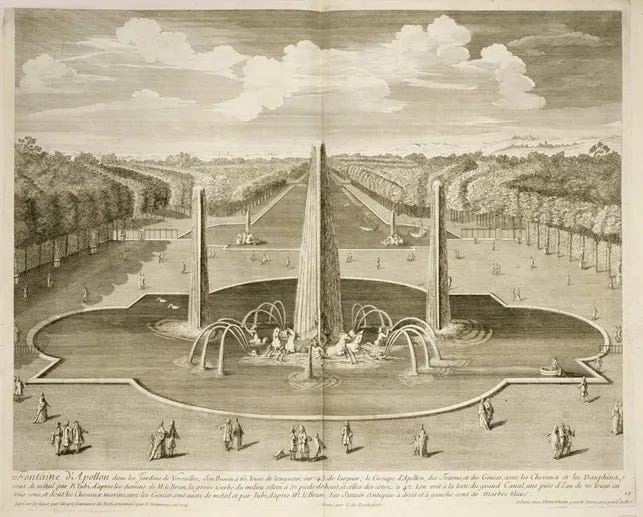
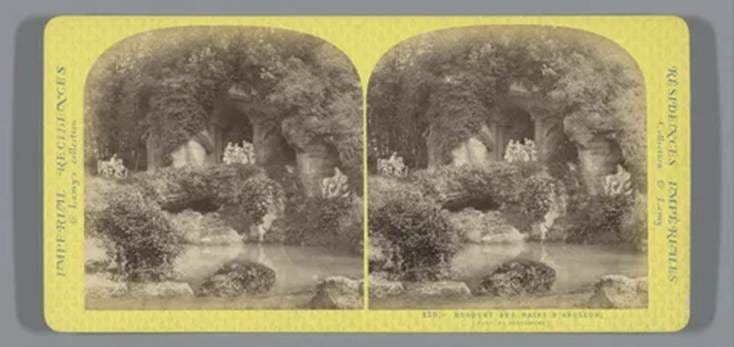
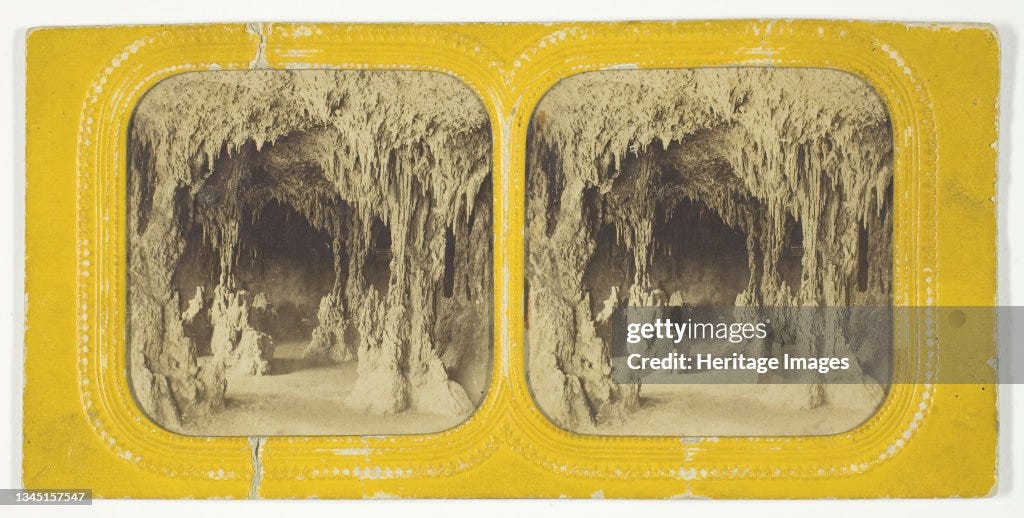
One more recent example of this is the Temple of Apollo next to the Versailles Palace built during the reign of King Louis XIV (1638-1715) who called himself the “Sun King,” and who will play a significant role in our story “Towards a New Jerusalem.” This Temple of Apollo was built by Nicodemus Tessin and is said to be modeled off of Tiberius’ Temple at Capri.[3]
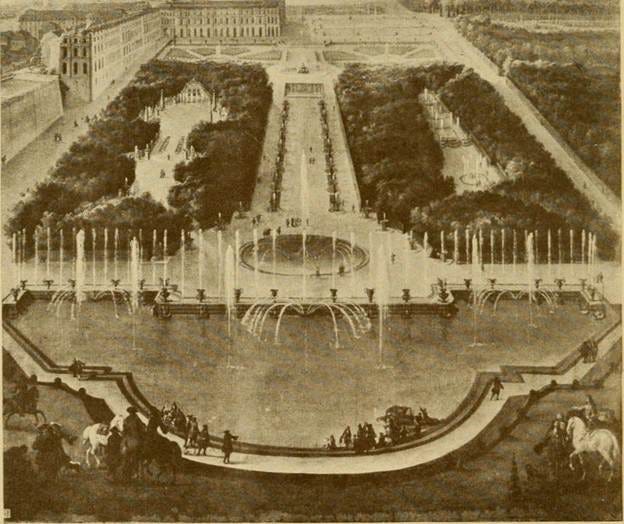
Tiberius (42 BC-37 AD) was the second Roman emperor to rule, from 14-37 AD, and was the step-son of Augustus (born as Gaius Octavius) founder of the Roman Empire. Tiberius’ reign would be followed by that of the butcher Caligula.
Tiberius was away from Rome for an extended period of time, settling in Rhodes in 6 BC and remaining there for a number of years. He was adopted by Augustus in 4 AD after Augustus’ own two sons, Lucius and Gaius, had been killed in battle.
Tiberius returned to Rome in 12 AD to receive his ”co-Princeps.” Augustus died two years later and Tiberius was named Emperor of Rome. However, Tiberius did not seem very interested in the actual responsibilities of a Roman emperor.
By 22 AD Tiberius shared his tribunician authority with his son Drusus and began making yearly excursions to the South of Italy, which became longer and longer every year. In 26 AD, despite his son Drusus dying under mysterious circumstances three years prior with no replacement, Tiberius decides to move to an imperial villa complex he inherited from Augustus on the island of Capri. Just off the coast of southern Italy, the island of Capri was used as a popular retreat among Rome’s “upper classes” particularly those who valued “cultured leisure.”
According to the writings of Gaius Suetonius Tranquillus, a Roman historian and biographer who wrote The Lives of the Caesars[4], and to which many apologists of Tiberius have tried to throw under the rug as hyperbole, was published around 121 AD during the reign of Emperor Hadrian. Suetonius writes:
On retiring to Capri he [Tiberius] devised a pleasance for his secret orgies: teams of wantons of both sexes, selected as experts in deviant intercourse and dubbed analists, copulated before him in triple unions to excite his flagging passions. Its bedrooms were furnished with the most salacious paintings and sculptures, as well as with an erotic library, in case a performer should need an illustration of what was required. Then in Capri's woods and groves he arranged a number of nooks of venery where boys and girls got up as Pans and nymphs solicited outside bowers and grottoes: people openly called this "the old goat's garden," punning on the island's name.[5]
This was the man that King Louis XIV sought to emulate in his construction of his own groves and grottoes within the gardens of the Versailles Palace.
Suetonius continues:
He [Tiberius] acquired a reputation for still grosser depravities that one can hardly bear to tell or be told, let alone believe. For example, he trained little boys (whom he termed tiddlers) to crawl between his thighs when he went swimming and tease him with their licks and nibbles; and unweaned babies he would put to his organ as though to the breast, being by both nature and age rather fond of this form of satisfaction. Left a painting of Parrhasius's depicting Atalanta pleasuring Meleager with her lips, on condition that if the theme displeased him he was to have a million sesterces [Roman coin] instead he chose to keep it and actually hung it in his bedroom. The story is also told that once at a sacrifice, attracted by the acolyte's beauty, he lost control of himself and, hardly waiting for the ceremony to end, rushed him off and debauched him and his brother, the flute-player, too; and subsequently, when they complained of the assault, he had their legs broken.
… he went to Capri, particularly attracted to that island because it was accessible by only one small beach, being everywhere girt with sheer cliffs of great height and by deep water.
… At Capri they still point out the scene of his executions, from which he used to order that those who had been condemned after long and exquisite tortures be cast headlong into the sea before his eyes…And had not death prevented him, and Thrasyllus, purposely it is said, induced him to put off some things through hope of a longer life, it is believed that still more would have perished, and that he would not even have spared the rest of his grandsons; for he had his suspicions of Gaius and detested Tiberius as the fruit of adultery. And this is highly probable, for he used at all times to call Priam [King of Troy] happy, because he had outlived all his kindred.
… On his last birthday he dreamt….[of] the Apollo of Temenos, a statue of remarkable size and beauty, which he had brought from Syracuse to be set up in the library of the new temple,…
To summarise:
In AD 27, at the age of 69, Tiberius moved to Capri to govern the enormous Roman empire from his dozen villas there. For more than a decade, according to his biographer, Suetonius, Tiberius wallowed in hedonism -decorating his mountaintop Villa Jovis, or Villa of Jupiter, with pornographic paintings and statues, staging orgies with young boys and girls and torturing his enemies. (The ruins of the villa still exist; its tunnels, arches and broken cisterns crown the island’s eastern cliffs, from which the emperor was said to have tossed those who displeased him to their deaths.)[6]
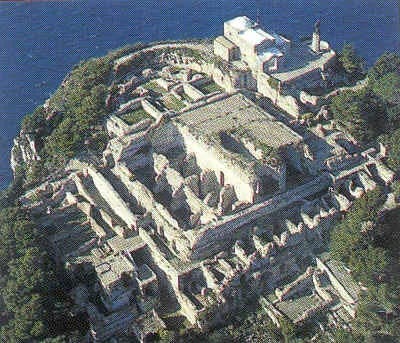
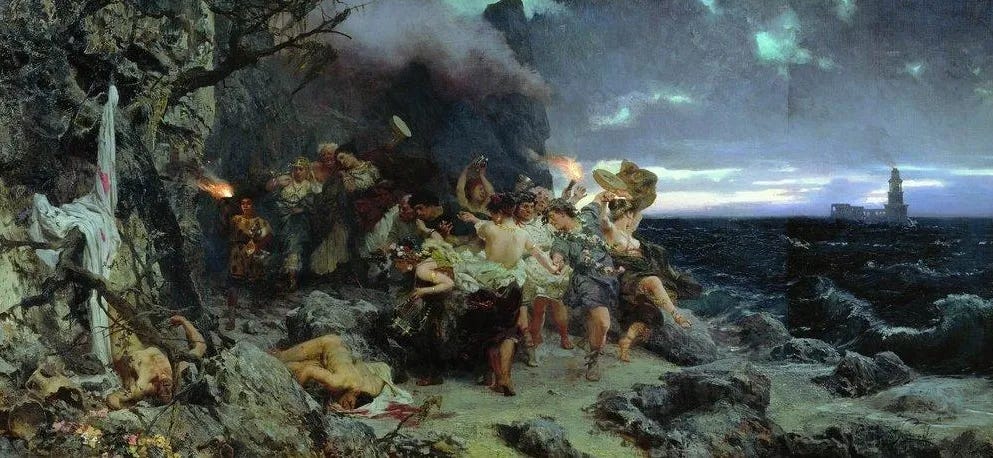
And so was the reign of Tiberius and should give one a rather good idea of the sort of “cultured leisure” King Louis XIV wished to emulate in his own groves and grottoes without the inconvenience of having to travel to a far off island, but rather built his own little island within his very own palace gardens with its underground system of man-made caves.
But what does this all have to do with our story “Towards a New Jerusalem”? A great deal in fact.
As already mentioned in Part I, this series will go through multiple threads that are directly connected with each other and are united in their cause and vision, that is, a Millenarian vision to restore Solomon’s Temple. The regeneration of the Temple of Jerusalem through a rebuilding of the world psyche.
The Father of Theosophy, Emanuel Swedenborg (1688-1772) will play a central role in these developments, whose life’s work and network directly interacted with that of King Louis XV (the son of King Louis XIV), Zinzendorf’s Moravians, Jacob Frank’s Sabbatians, the Jacobites (Stuart Restoration) as well as the Scottish Rite. These networks were directly working with each other towards rebuilding the Temple of Jerusalem, not just in the specific location of Jerusalem but throughout Europe. In fact, the institution of the Scottish Rite has this mission as a rather explicit role.
Recall the famous French architect Nicodemus Tessin who built King Louis XIV’s Temple of Apollo. This same Nicodemus Tessin, according to Marsha Keith Schuchard’s extremely well researched book “Emanuel Swedenborg, Secret Agent on Earth and in Heaven: Jacobites, Jews, and Freemasons in Early Modern Sweden” would attempt to restore the “Temple in the North” under Swedish King Charles XII modeled off of the Temple of Jerusalem. Tessin was a master freemason and one of the most renown architects of all of Europe. However, due to constant wars, with King Charles XII dying in battle, this plan did not succeed until the reign of King Gustav III when the Swedish Rite (a branch of the Scottish Rite) became an official servant to the Swedish state, directly subservient to King Gustav III. Swedenborg would play a central role in developing the Swedish Rite and served Sweden from King Charles XII to Gustav III during his lifetime.
Marsha Keith Schuchard writes in Emanuel Swedenborg, Secret Agent on Earth and in Heaven: Jacobites, Jews, and Freemasons in Early Modern Sweden (2011):
Recently published documents[7] reveal that the king [Gustav III] and his brothers performed Kabbalistic-Swedenborgian rituals in a secret Masonic “Sanctuary,” modelled on the Temple of Jerusalem, in the royal palace.
They also introduced the Masonic degree of “Stuart Brother,” to be given to their most loyal supporters. In 1783, during a visit to the elderly Charles Edward Stuart [heir to the Stuart Restoration] in Italy, Gustav was named the Pretender’s successor as Grand Master of the Masonic Order of the Temple—an order that Swedenborg had envisioned in London in 1745. When Charles Edward died in 1788, a century after Swedenborg’s birth, Gustav assumed the Grand Mastership, and the Temple was indeed restored in the North.[8]
Determined to use Freemasonry as an instrument of state, Gustav expanded the mystical Swedish Rite into the enemy territories of Russia and Prussia, forming in effect an esoteric-political ‘fifth column.’
It should also be noted that King Louis XIV’s was directly involved in the revival of the modern Templar Order and the Stuart Restoration cause, a mission that would be continued by his son King Louis XV.

Although the name Solomon derives from Hebrew (Shelomo) and means “peace”, (shalom), there is a gnostic interpretation to his name which we should not ignore since these networks we are discussing here were very much organised by gnostic interpretation, including that of the gnostic gospels. Thus, the name Solomon can also be broken down to Sol-Ammon.
Sol meaning “Sun” in Latin, it can also be interpreted as meaning the second sun, meaning the planet Jupiter, often referred to as the soul of the world. Recall the Babylonian god Marduk was also a second sun, and has Jupiter as his representation. For the Ancient Egyptians, “Om” was known as “Ammon” or “Amun.” Ammon would eventually be known as Amon-Ra an Egyptian deity known as a solar deity in the form of a ram.[9] The ram is also a symbol of virility and thus Amun also became thought of as a fertility deity.
Thus, according to such a gnostic interpretation, the Temple of Sol-Ammon could be interpreted as akin to the Temple of Apollo with connotations to fertility. Recall the Temples of Apollo did have a priestess for each temple, who was selected by the priests of Apollo for her “right attributes.”
This bears no historical relevance to the actual life of King Solomon as should be clear with all of the tall tales of the freemasons, however, this does not change the fact, no matter how bizarre, that the Temple of Solomon has been a major symbol in influencing historical developments that continue to shape the world we live in today.
But enough of this thread for now, we will continue this story in future instalments.
The story of Bernard de Clairvaux (c.1090 -11153) will be our focus here, and how this Benedictine Ultramontanist monk co-founded the original Knights Templar Order (1118), also known as the Poor Fellow-Soldiers of Christ and the Temple of Solomon, as well as the Cistercian Order and was the main organising force for the Second Crusade, to which there was little enthusiasm for.
A large part of Clairvaux’s enthusiasm for the Second Crusade was the rebuilding of Solomon’s Third Temple in Jerusalem, hence his name for the Templars. The First Crusade had established the Kingdom of Jerusalem (1099), also known as the Crusader Kingdom, lasting for almost 200 years.
These actions will bear a great deal of significance to the core of our story in this series. However, there is a much stranger contribution Clairvaux will make to our story here, and that is on the subject of bridal mysticism, specifically tied to his sermons on the Song of Songs and its influence on Zinzendorf’s Moravians and the scandal that hit their religious communes beginning in the 1740s, known as The Sifting Time, which revolved around radical concepts of bridal mysticism, the declaration of their brothers as now “sisters,” the worshipping of Christ’s side-wound (which they called the “side-hole”) including the desire to enter Christ’s side hole as one of the “holy of the holies,” and what appears to be acts of necrophilia.
The Song of Songs, also known as the Song of Solomon, is in the third and final section of the Hebrew Bible (The Old Testament) and its inclusion into the bible remains controversial to this day, as well as how one is to interpret it.
Bernard de Clairvaux is one of the most influential contributors to Christian mysticism, in particular his sermons on bridal mysticism directly rely on his reading of the Song of Songs, also known as the Song of Solomon.
It is put forward by some academics that the Song of Songs is one of the overtly mystical Biblical texts for the Kabbalah, which gave an esoteric interpretation on all the Hebrew Bible. Following the dissemination of the Zohar in the 13th century, Jewish mysticism took on a metaphorically anthropomorphic erotic element, and Song of Songs is an example of this.[10]
The Song of Songs is also recognised as partaking in the Holy of Holies which is mentioned in the Hebrew Bible and refers to the inner sanctuary of the Tabernacle where the Shekhinah (God’s presence) appeared. As a part of the Temple in Jerusalem, the Holy of Holies was situated somewhere on the Temple Mount, its precise location is a matter of dispute, with some classical Jewish sources identifying its location with the Foundation Stone, which sits under the current Dome of the Rock.
The Crusaders associated the Holy of Holies with the Well of Souls, a small cave that lies underneath the Foundation Stone in the Dome of the Rock.
Another strange connection to Zinzendorf’s Moravian communes was its connection to Valentinian gnosticism, including the notion of a Bridal Chamber, a concept whose origin is attributed to Valentinus (c. 100 CE – c. 165 CE), where the mystics viewed “marriage” as a symbol of the union of the human soul with God.
Valentinianism was one of the major if not the most influential gnostic Christian movements to have existed. It remained active until the Council of Nicea, where gnostic Christian sects took a massive hit and had to go underground for almost a millennia. Most scholars believe that Valentinus wrote the Gospel of Truth, one of the Nag Hammadi texts.
The chief sacrament of the Valentinians seems to have been that of the bridal chamber (nymphon). The gnostic Gospel of Philip, a probable Valentinian text, reads:
There were three buildings specifically for sacrifice in Jerusalem. The one facing the west was called "The Holy". Another, facing south, was called "The Holy of the Holy". The third, facing east, was called "The Holy of the Holies", the place where only the high priest enters. Baptism is "the Holy" building. Redemption is the "Holy of the Holy". "The Holy of the Holies" is the bridal chamber. Baptism includes the resurrection and the redemption; the redemption (takes place) in the bridal chamber.